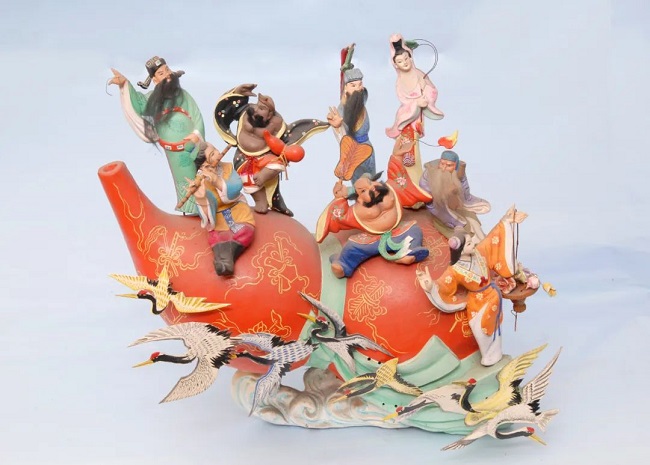
Eight Immortals
Introduction
The Eight Immortals are a group of legendary figures in Chinese mythology known for their magical powers and significant influence in Taoist tradition. They are believed to bring luck and symbolize longevity and prosperity. The immortals include Zhang Guolao, Han Xiangzi, Cao Guojiu, Lyu Dongbin, Lan Caihe, Li Tieguai, Han Zhongli, and He Xiangu. These figures have been depicted in various cultural, artistic, and literary forms throughout Chinese history.
Historical Background
The Eight Immortals have existed in Chinese folklore for over a millennium, with their roots tracing back to the Tang Dynasty (618-907). Over time, their stories evolved, integrating Taoist beliefs and philosophies. The immortals became a central part of Taoist teachings, symbolizing the pursuit of spiritual enlightenment and immortality. The Ming Dynasty (1368-1644) saw increased popularity of their tales, with the creation of various art forms such as Fahua ceramics, which prominently featured their images. These ceramics, known for their vibrant colors and intricate designs, were predominantly crafted in regions like Shanxi, further embedding the immortals in Chinese culture.
Mythology and Legends
Each immortal has a unique origin story, often involving divine intervention or moments of enlightenment. Each immortal uses their unique ability to combat evil, help the needy, and impart wisdom. Lyu Dongbin, for instance, is one of the most celebrated immortals, believed to have been a Tang Dynasty scholar who encountered an ancient sage and decided to pursue a life of spirituality. Li Tieguai is depicted as a beggar with a crutch, representing resilience and compassion for the poor. These origin tales highlight the diversity and richness of the immortals' background, showing how each embodies different virtues and life lessons. Han Xiangzi, the musician, is known for his flute that can summon birds and invoke happiness. Cao Guojiu, a figure associated with justice, often assists in maintaining the cosmic balance. These stories have been passed down through generations, serving as both entertainment and moral guides in Chinese society.
Cultural Significance
Influence in Chinese Culture
The Eight Immortals have deeply influenced various aspects of Chinese culture. They are often invoked in festivals, and their images are commonly used in Chinese New Year decorations to symbolize good fortune and longevity. Their legends have permeated different cultural expressions, from operatic performances in traditional Chinese theater to modern storytelling. The Eight Immortals are not just mythological figures but are integrated into the everyday cultural fabric of China, representing ideals that many aspire to achieve.
Depictions in Art and Literature
Artistic depictions of the Eight Immortals have been prevalent since the Song Dynasty (960-1279), with numerous paintings, ceramics, and sculptures illustrating their storied adventures. Literature has also embraced their tales, with narratives and poems celebrating their heroics and wisdom. These artistic and literary works have ensured that the Eight Immortals remain a prominent and enduring part of Chinese cultural heritage, continuing to inspire and educate people about traditional Chinese beliefs and values.
In Art and Architecture
The Eight Immortals are prominently featured in Chinese art and architecture, with their images adorning temples, palaces, and everyday objects. A notable example is the intricate red sandalwood box from the Qing Dynasty, which depicts the Eight Immortals Offering Birthday Greetings in exquisite detail. Temples like Chunyang Palace in Shanxi honor them through paintings and sculptures, such as the Eight Immortals Crossing the Sea mural. These artistic representations serve not only as religious symbols but also as significant cultural artifacts, reflecting the historical and artistic evolution of China.
Legend of Penglai
Penglai is a legendary abode of the immortals described in ancient Chinese texts. It is depicted as an island of eternal summer, where the Eight Immortals are believed to congregate. The legend of Penglai has been associated with various historical locations, such as the Penglai Pavilion in Shandong, famous for its mesmerizing mirages. This mythical realm has captured the imagination of countless generations, symbolizing the pursuit of immortality and spiritual enlightenment. Penglai's stories contribute to the mystique and allure surrounding the Eight Immortals, embedding them further into the cultural and spiritual landscape of China.
Influence on Martial Arts and Philosophy
The Eight Immortals have also had a profound impact on Chinese martial arts and philosophy. Their stories often emphasize the balance between strength and wisdom, and their legendary skills have inspired various martial arts forms. Practices such as the Baxian cudgel, inspired by the immortals, combine elements of rigidity and flexibility in martial arts training. Additionally, the philosophical underpinnings of the Eight Immortals' tales resonate with Taoist principles, encouraging harmony, balance, and the pursuit of enlightenment.








